
Designing a dual-language learning program
In 2024, I embarked on one of the most rewarding journeys of my career: developing and implementing a fully bilingual literacy and language program for a Dutch-English kindergarten class in The Netherlands. What began as a creative solution to support early Dutch language learners evolved into a robust, student-centered, cross-curricular approach, grounded in phonics, play, and storytelling.
This project wasn’t just about teaching children to read and write in two languages. It was about sparking intrinsic motivation, integrating language and content, and creating a literacy-rich environment where curiosity drives learning.
From Scratch: Why I Designed My Own Curriculum
Early in the year, it became clear that the existing Dutch literacy materials weren’t suited to our bilingual learners. The curriculum relied heavily on vocabulary children hadn’t yet acquired, and even included nonsense words—confusing for second-language learners.
Instead of adapting an inflexible framework, I designed a dual-language curriculum from scratch—one that was developmentally appropriate, cross-curricular, and rooted in students’ lived experiences. My goals were to:
Align with literacy and phonics goals in both languages
Embed Dutch learning into meaningful content areas like science and math
Leverage high-frequency cognates (like bus, bal, pet) to support transfer
- Use embodied learning and storytelling to make reading and writing joyful
This aligns with the principles of Content and Language Integrated Learning (CLIL) and Translanguaging, both of which highlight the benefits of using students’ full linguistic repertoires and integrating language learning with real-world content.

Phonics Meets Purpose: Building Foundational Literacy
We started with the basics: learning individual sounds, blending, and segmenting. But I knew it wasn’t enough to just teach phonics—we needed context and purpose.
Some highlights:
- I created custom decodable stories based on our class characters (including the beloved Pigeon from Mo Willems’ books).
- We built a “Letter Studio”, where phonics lessons were tied to storytelling, illustration, and math.
- Students completed “fill-in-the-story” literacy challenges where they used CVC words and vocabulary from previous lessons.
• I introduced a “Sound Wall” and phonics tools designed to work across both English and Dutch, allowing students to reinforce connections between languages.
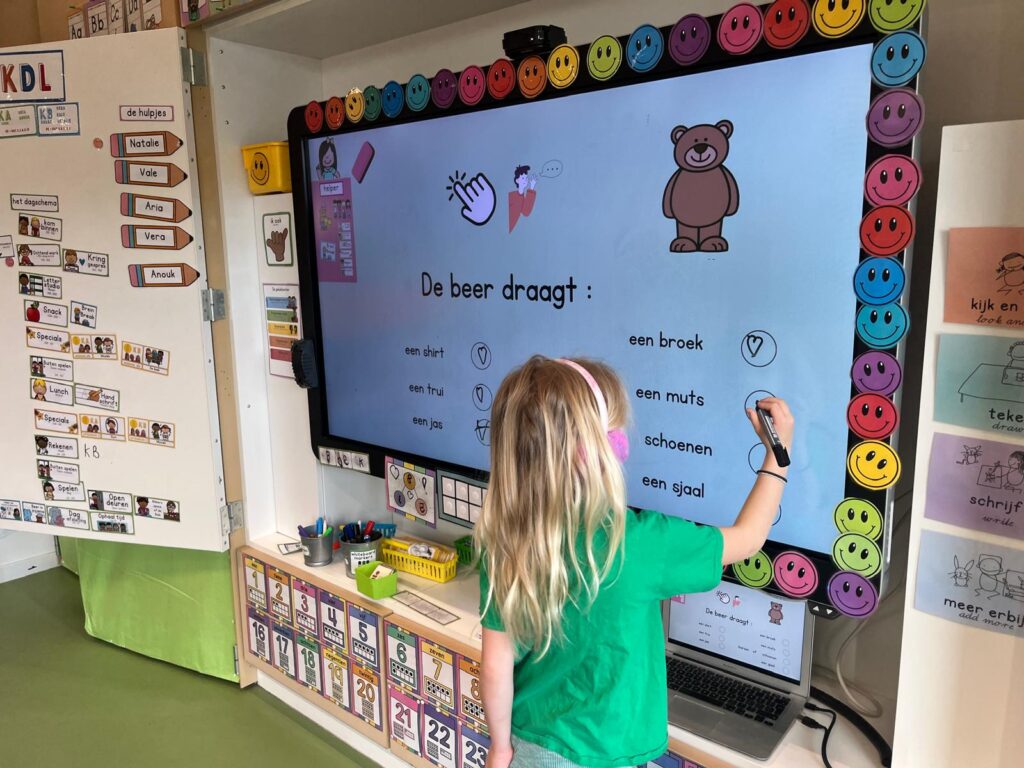
Learning Through Play (Yes, Even Literacy)
My background in play-based learning inspired me to break out of traditional workbook instruction and bring movement and imagination into everything we did:
Alphabet Yoga, scavenger hunts, and “Letter Detective” games reinforced letter-sound knowledge through physical engagement
Class Books & Weekend Writing promoted sentence-building with personal relevance. Children became authors of their own class books!
“Daily jons” and real-life writing tasks gave purpose and ownership to their language use, from weather charts to birthday invites for our classroom characters
We didn’t just learn letters, we lived them. Through games, songs, art, and daily routines, language became a part of everyday play and conversation. Children learn through play.
These practices are rooted in Vygotsky’s sociocultural theory, which emphasizes the role of play, social interaction, and meaningful contexts in early cognitive and linguistic development.

Content-Based Language Learning: Dutch Through Science & Math
One of my key goals was to embed Dutch language learning into content instruction, not just literacy blocks. I integrated language learning across content areas using a Content-Based Language Learning (CBLL) approach:
- In math, we used Dutch mini-lessons with number bonds, ten-frames, and comparative language (meer, minder, evenveel)
- In science, we explored real-world topics like plant growth, animal habitats, and forces (duwen, trekken), paired with scaffolded sentence stems: “Ik zie een boom” (“I see a tree”)
- Language-rich play corners invited children to write shopping lists, build labeled maps, or roleplay animal rescue missions
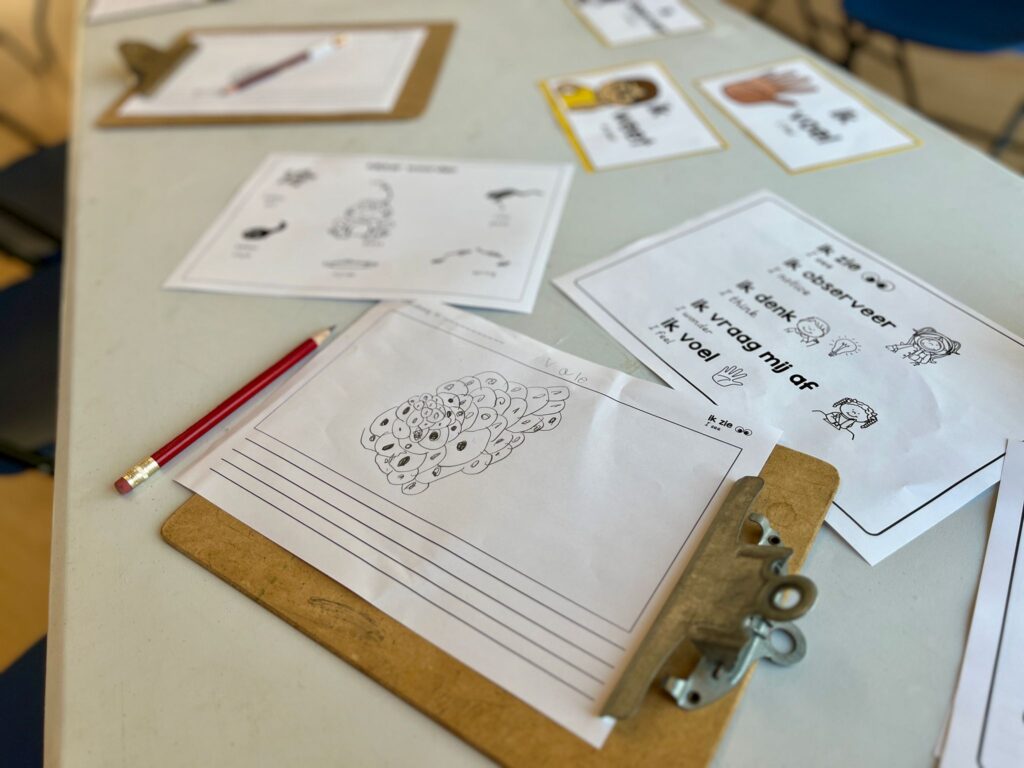
A Storyline That Sparked Language Use: Enter… Pigeon!
One of the most unexpectedly powerful components of the program was the storyline I co-created with the students featuring Pigeon. Inspired by Mo Willems, this classroom character:
- Sent students mysterious letters and riddles
- Asked for help with tasks like measuring buses, decoding Dutch messages, and baking cakes for friends
- Introduced authentic reasons to read, write, and speak in Dutch and English
- Inspired playful yet pedagogically intentional writing, decoding, and comprehension challenges
Pigeon gave us a narrative thread that united our literacy, math, and emotional learning. Students even wrote him letters, built birthday parties, and created signs to “control his bus obsession!”
Language Growth We Could See and Hear
By year’s end, the results were beyond what I had hoped for. Students who started with single Dutch words were now:
- Responding in complete Dutch sentences
- Reading decodable passages confidently
- Taking leadership in routines like weather reporting and daily schedules
- Using Dutch in cross-curricular contexts like math storytelling, science writing, and free play
And just as importantly…they loved it!
Final Reflections
Creating and leading this dual-language program has been one of the most creatively fulfilling projects of my career. It allowed me to:
- Merge my passion for language acquisition with hands-on curriculum design
- Build an adaptable, meaningful, and joyful learning environment
- Leverage bilingualism not as a challenge, but as a superpower for learning
